
 The Specialty News
Tesla’s FSD Software Successfully Navigates Narrow Urban Obstacles
A viral video demonstration hints at imminent expansion into Israel while proving the maturity of end-to-end neural networks.
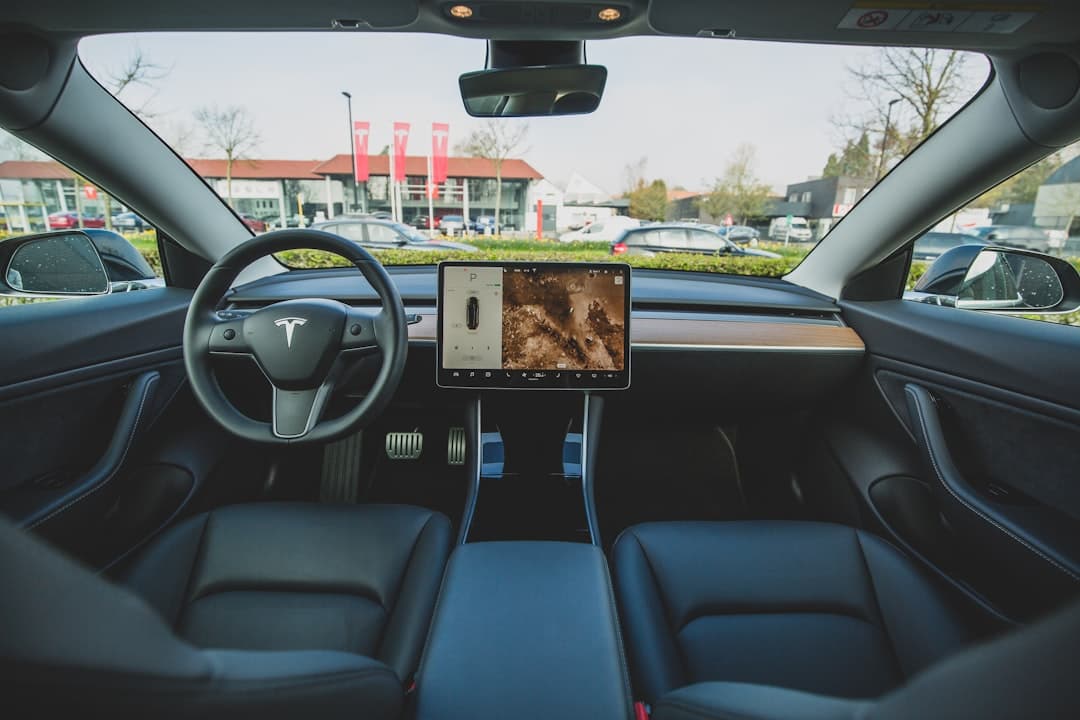
A short, captioned video from Tesla titled "Just squeezing through" shows the company’s Full Self-Driving (FSD) software effortlessly threading a needle through a gauntlet of parked cars and oncoming traffic. It is a striking display of spatial awareness that makes the machine look less like a computer program and more like a cautious, observant driver. Elon Musk didn't hesitate to amplify the moment, quote-tweeting the clip with a simple, direct command: "Try Tesla self-driving!"
The Shift to Intuitive Navigation
At the heart of this performance is a move away from the rigid, rule-based coding that dominated early autonomous efforts. By relying on end-to-end neural networks, Tesla’s v12.3 software is learning to mirror human behavior, interpreting complex urban environments through sight rather than just pre-programmed instructions. The ability to handle these "edge cases"—those unpredictable moments where a street suddenly narrows or traffic flows in erratic patterns—is the primary technical hurdle to true autonomy.
This isn't just about software polish; it is a vital step in public trust. By showcasing the system’s competence in tight urban quarters, Tesla is signaling to both users and skeptical regulators that their neural network is becoming robust enough to handle the chaotic reality of city streets. Each of these videos functions as a proof-of-concept, providing empirical evidence that the technology is maturing rapidly.
Bridging the Gap to Global Adoption
The marketing strategy here is as aggressive as the software development itself. By using X as a platform to deliver rapid-fire evidence of progress, Tesla is cultivating a grassroots movement that builds momentum even before official government approval. This strategy seems to be yielding results; following the social media buzz, reports suggest that Israel’s Minister of Transport, Miri Regev, has indicated an imminent arrival of the technology in that region.
“the era of theoretical autonomy is over, and the era of demonstrated, real-world utility has officially begun.”
The path to mass-market utility, however, remains a steep climb. Scaling FSD globally requires more than just high-quality neural networks; it requires training those networks on the diverse infrastructure and distinct traffic customs of every new country. As Tesla pushes into the European Union and the Middle East, their ability to replicate the success of these "squeezes" across different regulatory environments will determine whether this becomes a standard automotive feature or remains a regional luxury. For now, the takeaway is clear: the era of theoretical autonomy is over, and the era of demonstrated, real-world utility has officially begun.
From Viral Clip to Green Light
The Brief
Stay curious
AI and technology: what changes and why it matters.
Your daily selection, in English or Spanish.
Free forever. Unsubscribe anytime.
More stories




Conversation
Start the conversation