
 The Specialty News
Nvidia Delivers First DGX Station GB300 to Andrej Karpathy
The new 20-amp desktop supercomputer signals a massive shift toward local, agentic AI development.
When Andrej Karpathy, the celebrated AI researcher and former Tesla autopilot lead, received a mysterious delivery requiring a specialized 20-amp power circuit, he knew something powerful was coming. The package was the first-ever NVIDIA DGX Station GB300, a deskside supercomputer that packs the punch of a data center into a workstation tower. It is a striking signal from Nvidia CEO Jensen Huang: the future of AI isn't just about massive server farms, but about empowering independent developers to build autonomous systems right at their own desks.
Powering the Agentic Shift
The GB300 is not your average workstation. Under the hood, it features the Grace Blackwell Ultra Desktop Superchip, delivering a staggering 20 petaFLOPS of AI compute performance. With 748GB of unified, coherent memory, it allows developers to run models with up to one trillion parameters locally. This is a game-changer for anyone building 'agentic' AI—systems designed to reason, plan, and execute tasks independently over long durations.
Historically, training or running such sophisticated agents required offloading data to expensive, latency-prone cloud infrastructure. By bringing this compute power locally, Nvidia is effectively removing the barriers to privacy and reliability. Whether it’s Karpathy’s own 'Dobby the House Elf' robotic projects or broader autonomous agents, the hardware is built to handle the constant, 'always-on' reasoning required for the next generation of AI.
A New Era for the Independent Developer
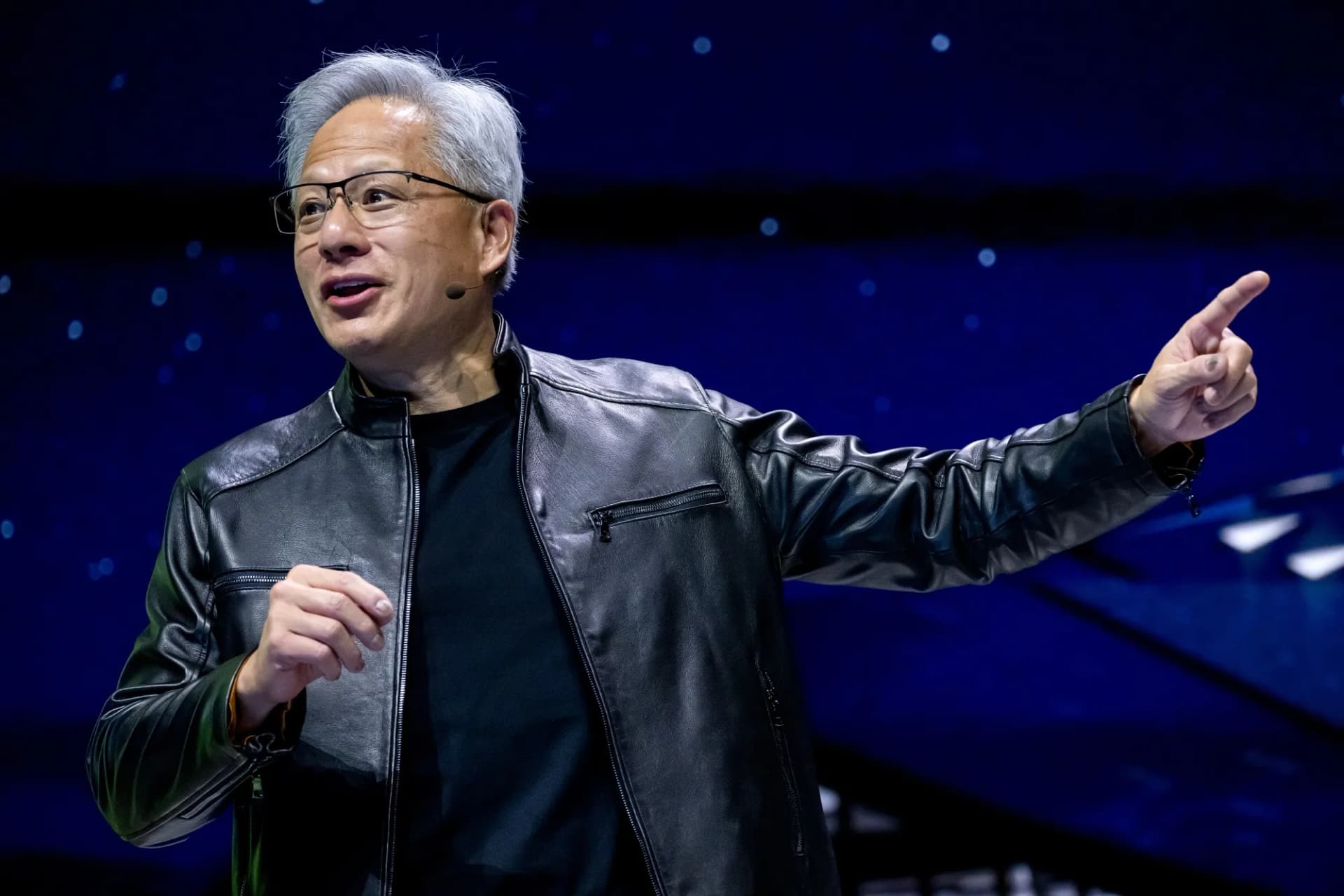
This delivery echoes a pivotal moment a decade ago, when Jensen Huang gifted the first DGX-1 to OpenAI. That gesture helped catalyze the entire industrial-scale deep learning boom. By putting this level of hardware directly into the hands of visionaries like Karpathy, Nvidia is signaling that the era of the 'AI Agent' will be defined by the independent developer, not just the massive enterprise corporation.
“the era of the 'AI Agent' will be defined by the independent developer, not just the massive enterprise corporation.”
However, this power comes with practical hurdles. The 20-amp power requirement and premium price tag mean these units aren't for the casual hobbyist. Yet, for the researchers and engineers defining the field, this represents a liberation from the cloud. As tools like NemoClaw and OpenShell emerge alongside this hardware to provide safety guardrails, we are likely looking at the birth of a decentralized, hyper-capable wave of autonomous AI that lives closer to the user than ever before.
A Datacenter on the Desk
The Brief
Stay curious
AI and technology: what changes and why it matters.
Your daily selection, in English or Spanish.
Free forever. Unsubscribe anytime.
More stories



Conversation
Start the conversation