
 The Specialty News
Mistral AI Unifies Reasoning, Vision, and Coding in Small 4
The new 119B-parameter model slashes latency by 40% and triples throughput, proving smaller, optimized architectures can dominate.
For the past two years, the AI arms race has been defined by a chaotic sprawl: separate models for coding, separate ones for vision, and others for reasoning. Today, Mistral AI is shattering that fragmentation with the release of Mistral Small 4. By packing 128 experts into a single 119B-parameter architecture, the company has created an all-in-one engine that doesn't just match the performance of its predecessors—it does so with a 40% reduction in latency.
The End of Model Routing Headaches
For enterprise developers, the most compelling feature of Mistral Small 4 isn't just the benchmark scores—it’s the architectural simplicity. Previously, building a production-grade application required complex 'model routing' infrastructure, essentially acting as a digital traffic cop to send coding tasks to one model and vision tasks to another. Mistral Small 4 removes this overhead by unifying general instruction, reasoning, vision, and agentic coding capabilities into a single, Apache 2.0-licensed deployment.
Efficiency is the standout metric here. While other 'GPT-OSS' models might require massive, verbose outputs to reach a logical conclusion, Mistral Small 4 is tuned for high-density reasoning. In tests like AA LCR, it matches competitor performance using only 1,600 characters where others demand over 5,000. For businesses paying by the token, this isn't just an improvement—it’s a direct impact on the bottom line.
The secret sauce lies in its 'configurable reasoning' parameter. Users can now toggle a `reasoning_effort` dial, choosing between 'None' for lightning-fast, simple queries or 'High' for deep, multi-step logic. It’s a level of control that mirrors the evolution of the software stack, where developers transitioned from disparate libraries to unified, multi-purpose platforms that handle everything from linting to deployment within a single, streamlined interface.
A Strategic Pivot Toward Sustainable AI
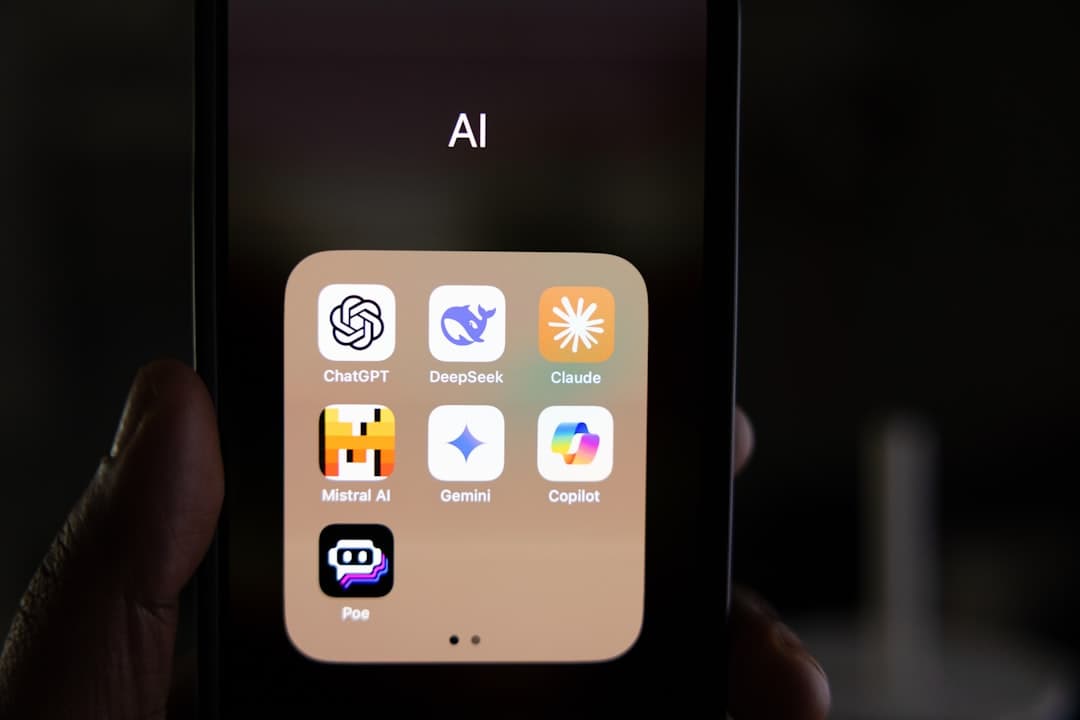
Mistral AI’s latest release reveals a clear, contrarian strategy: they are betting that the future of enterprise AI isn't in ever-larger, monolithic models, but in expertly optimized ones. By collaborating with the NVIDIA Nemotron Coalition and providing support for popular frameworks like vLLM and SGLang, the company is making it easier for firms to host high-performance intelligence on their own hardware.
“we are entering the era of 'dense efficiency,' where the winners will be the companies that provide the most utility for the fewest possible compute cycles.”
While the 119B-parameter footprint still requires significant compute—namely, a multi-GPU setup like the NVIDIA HGX H100—it represents a tangible path toward manageable production environments. We are seeing a move away from the 'bigger is better' philosophy that dominated 2024. Instead, we are entering the era of 'dense efficiency,' where the winners will be the companies that provide the most utility for the fewest possible compute cycles.
Ultimately, Mistral Small 4 isn't just a product launch; it’s a blueprint for the next wave of AI development. As corporations look to move beyond the experimental phase and integrate AI into their core operations, they will prioritize models that are reliable, predictable, and—above all—cost-effective. With this release, Mistral has provided the industry with a powerful, versatile tool that simplifies the complexity of the modern AI stack.
One Model vs the Model Zoo
The Brief
Stay curious
AI and technology: what changes and why it matters.
Your daily selection, in English or Spanish.
Free forever. Unsubscribe anytime.
More stories





Conversation
Start the conversation