
 The Specialty News
Meta’s Manus AI Moves From Cloud To Local Desktop Control
The $3 billion acquisition is betting that an agent living on your hard drive beats one trapped in a browser tab.
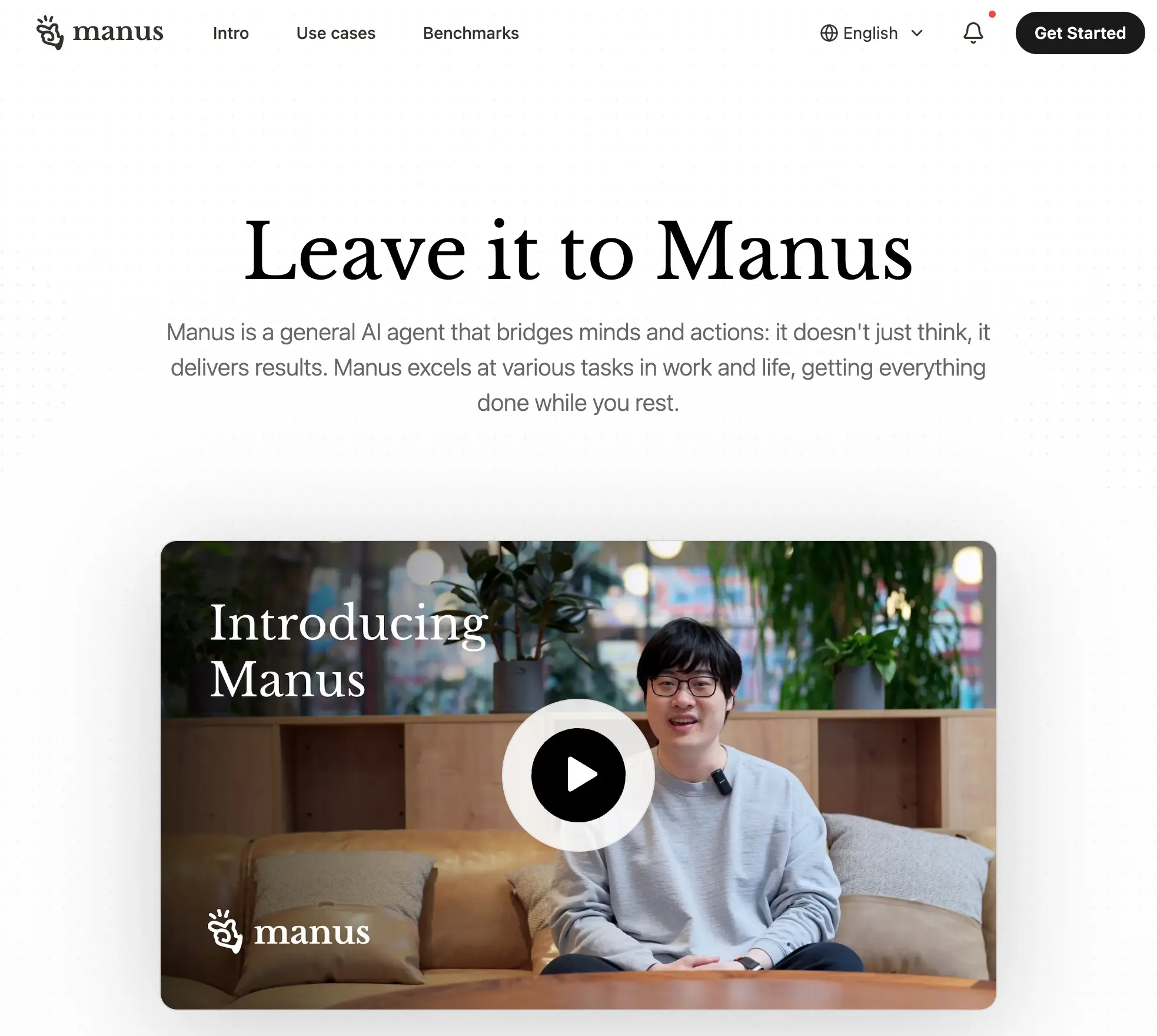
The future of AI isn't just a chatbot living in a browser tab; it’s an autonomous agent living on your hard drive. Today, Meta-owned Manus AI is making that leap, pulling its 'My Computer' agent out of the cloud and installing it directly onto your desktop. It is a bold architectural shift designed to transform AI from a digital consultant into an active, hands-on operator.
Why Local Execution Changes Everything
For the past year, most autonomous agents have been constrained by the 'sandbox' of a web browser. They could visit websites or pull data from APIs, but they were largely blind to the native files, complex software, and system settings that define your actual work. By moving to the desktop, Manus is breaking out of that cage.
This shift brings two immediate advantages: speed and depth. By operating locally, the agent no longer waits on cloud latency for every minor movement of the cursor or file interaction. It gains granular control over your native applications, essentially acting like a power user with infinite patience. The goal is to move beyond mere text generation to executing multi-step workflows across your entire OS, essentially turning the phrase 'Mind and Hand'—the namesake of Manus—into a reality for every user.
Yet, this power comes with a significant challenge: trust. Giving an AI permission to control your desktop is essentially granting it the keys to the kingdom. Security researchers have already raised flags about the risks of 'computer-use' agents, noting that they could theoretically be manipulated into executing malicious code. As Meta integrates this technology, the engineering challenge is to enable 'agent-level' autonomy without inadvertently creating an 'agent-level' vulnerability.
The Road Ahead for Personal AI
We are currently witnessing a massive historical reversal. For a decade, the tech industry pushed everything to the cloud to achieve scale. Now, the most advanced AI models are sprinting back to the edge, seeking the privacy, speed, and tactile control that only local hardware can provide. This 'Local-first' shift suggests that the next generation of productivity won't be defined by which cloud services you use, but by which agent has the deepest access to your machine.
“the next generation of productivity won't be defined by which cloud services you use, but by which agent has the deepest access to your machine.”
The real opportunity here is the total elimination of the 'cognitive barrier' between intention and action. Right now, if you want a report, you have to find the data, format the spreadsheet, and draft the email. With a locally-integrated Manus, the user simply sets the intent, and the agent does the manual labor in the background. If Meta can solve the reliability issues—moving past the occasional hallucinated loop that plagues today's agents—this will shift the computer from a tool we operate into an assistant we collaborate with.
Success will depend on more than just code; it will require a massive leap in safety architecture. Users are rightly protective of their local data. If Manus can prove that it can handle complex, private workflows securely without compromising the device, it won't just be an app—it will be the new operating system of the modern workplace.
Out of the Tab, Onto the Desk
The Brief
Stay curious
AI and technology: what changes and why it matters.
Your daily selection, in English or Spanish.
Free forever. Unsubscribe anytime.
More stories

Conversation
Start the conversation