
 The Specialty News
Google Research’s S2Vec Learns the Language of Urban Landscapes
By turning complex city layouts into mathematical embeddings, Google is creating a 'foundation model' for our physical world.
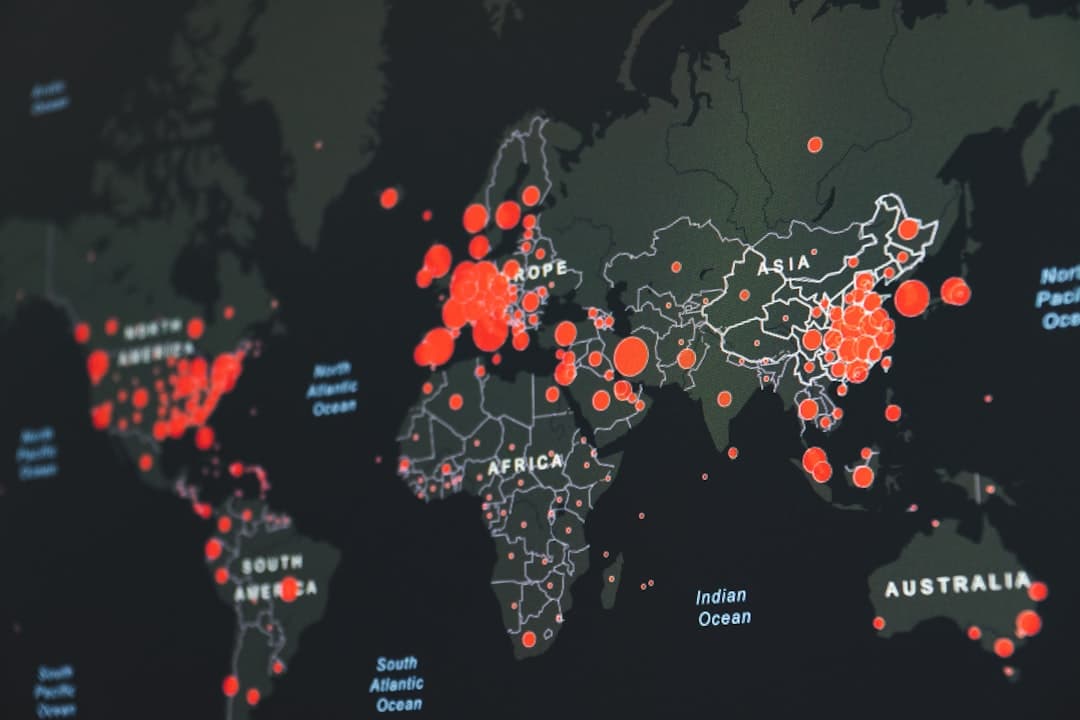
For years, map-making and urban analysis have relied on labor-intensive, hand-crafted models for every specific problem—be it tracking population growth or predicting carbon emissions. Now, Google Research has introduced S2Vec, a self-supervised framework that turns the messy, multi-layered reality of our built environment into elegant mathematical summaries. It is the geographic equivalent of turning raw, chaotic text into the precise, searchable embeddings that power the world’s most advanced Large Language Models.
Decoding the Urban DNA
At the heart of S2Vec is a clever adaptation of the S2 Geometry library, which slices the Earth into a hierarchical grid. Rather than viewing a map as just pixels, S2Vec treats roads, buildings, and infrastructure as distinct data points. It uses a masked autoencoder, a machine learning technique that forces the model to 'fill in the blanks' of hidden map sections. By training on these missing pieces, the model develops an intuitive grasp of the 'character' of a neighborhood—learning that a dense cluster of low-slung, industrial-looking structures signifies something fundamentally different from a suburban residential grid.
What makes S2Vec remarkable is its efficiency. Because it learns without requiring manual labels or human intervention, it excels at 'zero-shot' geographic adaptation. This means researchers can point the model at a region it has never seen before—perhaps a rapidly expanding city in a developing nation—and it can immediately begin making high-fidelity predictions about metrics like housing density or infrastructure needs. It is essentially giving AI a shortcut to understanding the complex, structural DNA of our cities.
Building a Foundation for Planetary Insights

S2Vec is more than just a mapping tool; it is a foundational shift in how we approach geospatial science. By creating a task-agnostic 'shorthand' for any location, Google is opening the door for urban planners, environmentalists, and policymakers to scale their work. Instead of spending months building custom models for every new city or country, they can now plug their data into the S2Vec framework to gain immediate, actionable insights. The real magic will likely happen when this built-environment 'language' is fused with other inputs, such as satellite imagery or mobility data, to paint a truly holistic picture of urban health.
“we are moving away from the era of bespoke, niche modeling and toward a world where geography is a searchable, understandable, and highly predictive asset.”
Of course, there is still work to be done. The team acknowledges that S2Vec currently struggles to capture natural landscapes—terrain, forests, and bodies of water don't always follow the same 'built' logic as a road network. However, the trajectory is clear: we are moving away from the era of bespoke, niche modeling and toward a world where geography is a searchable, understandable, and highly predictive asset. As this technology matures, it will empower organizations to make data-driven decisions that could define how we manage the next century of global urbanization.
How S2Vec Reads a City
The Brief
Stay curious
AI and technology: what changes and why it matters.
Your daily selection, in English or Spanish.
Free forever. Unsubscribe anytime.
More stories






Conversation
Start the conversation