
 The Specialty News
Apple M5 Max Redefines Portable Power With Record-Breaking Multi-Core Performance
New benchmarks suggest Apple's latest silicon is pushing laptop performance into territory once reserved for heavy-duty desktop workstations.
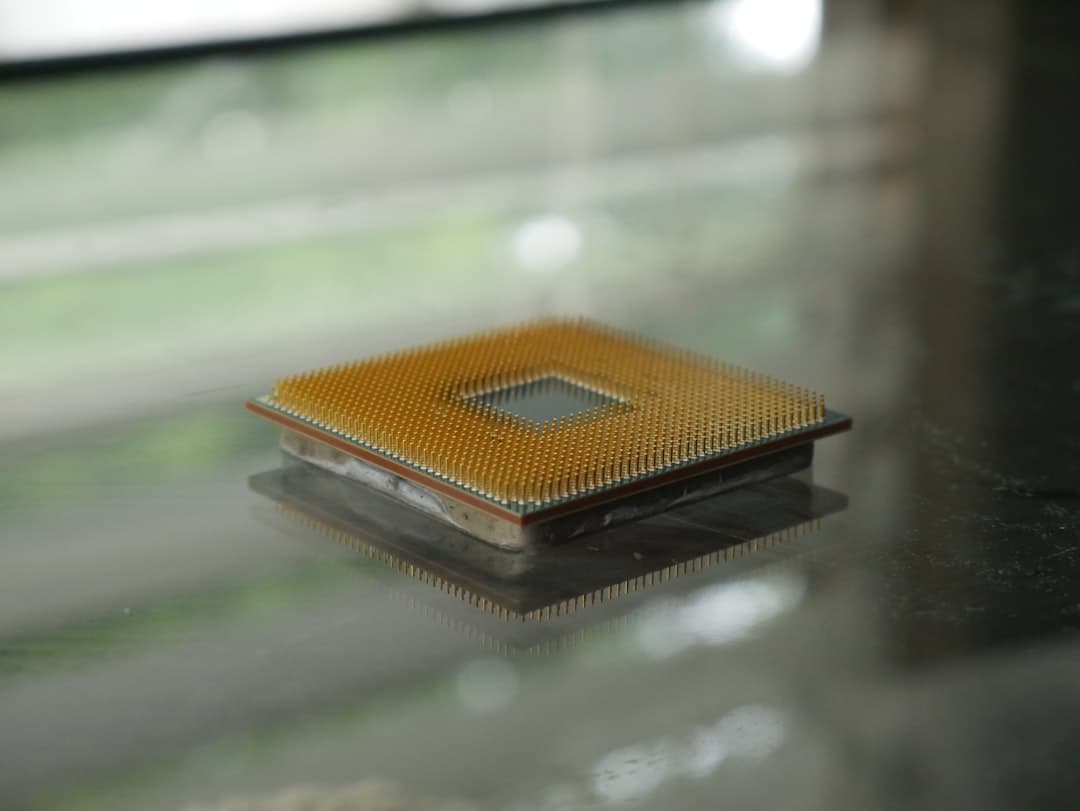
The bar for what a laptop can accomplish just moved significantly higher. Freshly leaked benchmarks for Apple's M5 Max chip reveal a staggering multi-core score approaching 30,000 on Geekbench, a level of raw processing power that threatens to make the distinction between 'mobile' and 'workstation' obsolete.
The Anatomy of a Mobile Powerhouse
At the heart of this performance leap is Apple’s new 'Fusion Architecture,' an engineering feat that utilizes a third-generation 3-nanometer process to cram an 18-core CPU—comprised of six power-efficient 'Super Cores' and 12 high-performance cores—into a single package. When paired with a 40-core GPU and 128GB of unified memory, this chip isn't just an iteration; it's a structural transformation of mobile computing efficiency.
Apple's Senior Vice President of Hardware Engineering, John Ternus, isn't shy about the intended use case. By integrating dedicated Neural Accelerators into the GPU, the M5 Max is designed to run advanced Large Language Models (LLMs) entirely on-device. This removes the latency and privacy hurdles of cloud-based AI, effectively turning the new MacBook Pro into a portable laboratory for developers and data scientists who previously required massive desktop rigs to run similar workloads.
Beyond the Hype: What Comes Next

While hitting 30,000 points on a synthetic benchmark is a brilliant headline, it is important to maintain perspective. Enthusiast-grade workstation CPUs like the AMD Threadripper PRO still hold a lead in absolute core-count-driven tasks, reaching scores well into the mid-30,000 range. Apple is not necessarily trying to beat a 64-core desktop chip in every category; they are trying to provide that same class of output within a power envelope that doesn't melt your lap.
“the future of professional computing isn't about having the largest machine—it's about having the most efficient one.”
The real lesson here is the triumph of vertical integration. By controlling the silicon, the OS, and the hardware architecture, Apple is creating a future where high-end AI development and professional 3D rendering are no longer tethered to a desk. As software continues to lean into local, on-device AI, the M5 Max proves that the future of professional computing isn't about having the largest machine—it's about having the most efficient one.
Inside the M5 Max
The Brief
Stay curious
AI and technology: what changes and why it matters.
Your daily selection, in English or Spanish.
Free forever. Unsubscribe anytime.
More stories



Conversation
Start the conversation