
 The Specialty News
Anthropic Doubles Down as Claude Opus 4.6 Hits 1M Token Context
By eliminating long-context premiums, Anthropic is pushing the industry toward a future where entire corporate codebases fit in a single prompt.

The barrier between AI models and massive, complex real-world projects just vanished. As of March 13, 2026, Anthropic has officially unleashed a 1-million-token context window for its flagship Claude Opus 4.6 and Sonnet 4.6 models, effectively ending the era of 'context rot' where performance degrades as data volume grows. For developers and researchers, this isn't just an incremental update—it's a fundamental shift in how we interact with digital intelligence.
The End of Chunking
Historically, working with large documents or extensive codebases required 'chunking'—breaking information into smaller, digestible pieces, which often led to lost context and erratic reasoning. With the 1M token capability, Opus 4.6 holds massive data sets in its active memory, allowing it to reason across thousands of pages or entire repository traces simultaneously. This is powered by Anthropic's new 'adaptive thinking' and 'context compaction' architecture, which manages compute resources based on task complexity.
The real wow factor is the pricing. By stripping away 'long-context premiums,' Anthropic is betting that utility is a stronger market driver than scarcity. Users can now process up to 600 images or PDF pages per request at standard rates of $5 per million tokens for input. This turns the model from a chatbot into an active orchestration layer, capable of deep-diving into regulatory filings or complex technical documentation without missing a beat.
Velocity as a Strategy
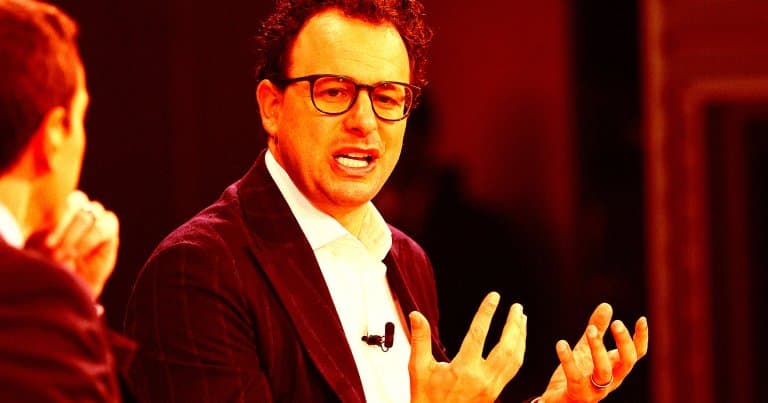
Anthropic is currently shipping major updates on a two-week cadence, a blistering pace enabled by their internal reliance on their own tools. By their own metrics, Anthropic engineers now leverage Claude for 60% of their daily work, creating a self-reinforcing loop of innovation. This speed is critical, especially as the model shifts from being a mere assistant to an autonomous agent capable of executing multi-hour coding tasks through Claude Code.
“the most powerful tool of the near future won't just be the one that knows the most, but the one that can autonomously manage its own reasoning to solve the hardest problems.”
Yet, this rapid evolution brings a new set of challenges. As these agents gain the ability to perform complex, unsupervised work, Anthropic is navigating a delicate path between explosive capability and safe alignment. With government agencies shifting their allegiances due to disagreements over military usage policies, the company is proving that technical leadership often comes with messy, high-stakes geopolitical trade-offs. The lesson here is clear: the most powerful tool of the near future won't just be the one that knows the most, but the one that can autonomously manage its own reasoning to solve the hardest problems.
The End of Chunking
The Brief
Stay curious
AI and technology: what changes and why it matters.
Your daily selection, in English or Spanish.
Free forever. Unsubscribe anytime.
More stories





Conversation
Start the conversation